Thank you for visiting! Below are recent articles from Kansas Nurse, the official members-only publication of the KSNA.

To learn more about KSNA visit www.ksnurses.com.

Thank you to our Sponsors

Workplace Harassment and Bullying in Academia

Kansas Nurse, KS Vol. 101, No.3
Harassment and bullying within the workplace continue to cause problems for nurses and organizations across the globe (Smith et al., 2020). Workplace harassment and…

2026 KSNA Election Candidates

Kansas Nurse, KS Vol. 101, No.3
The future of KSNA is shaped by the nurses who step forward to lead. We are proud to present the candidates for the Kansas…

KSNA President’s Message, August 2026

Kansas Nurse, KS Vol. 101, No.3
Linda Moody, DNP, MBA, RN Dear KSNA Members, As we move through 2026, I want to thank each of you for your continued dedication…

Reducing falls in hospitalized patients

Kansas Nurse, KS Vol. 101, No.2
Patient falls remain a serious problem in healthcare. ECRI lists “ongoing challenges with preventing falls” as one of its top 10 patient safety concerns…

Nursing education, AI, and best practices

Within healthcare, AI enhances diagnostics, supports personalized treatment plans, and aids the prediction of patient outcomes using algorithms to analyze medical images…

Articles From American Nurse that you may be interested in

Emotional intelligence in nursing

Nursing has long been described as one of the most demanding professions. Nurses must think critically, communicate effectively, practice safely and efficiently, and adhere strictly to professional guidelines. Historically and today, many in the profession work short-staffed and beyond scheduled…

Could organ transplantation become obsolete?

Living in the United States has offered most citizens knowledge about organ transplantation. After all, when we obtain a driver’s license, states currently ask whether we’d like to be listed as an organ donor. In addition, there is growing knowledge…

HAPI reduction through process improvement

Hostpital-acquired pressure injuries (HAPIs), areas of localized skin and tissue damage that develop when prolonged pressure restricts blood flow, typically form over bony prominences in patients with limited mobility. According to Roderman and colleagues, HAPIs affect an estimated 2.5 million…

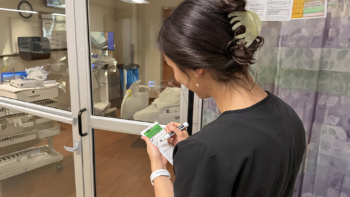
Medication safety at the bedside: Beyond the rights

The medication scans successfully. The electronic medication administration record shows a match. Pharmacy has verified the order. Then the patient says, “I feel much more lightheaded than I did earlier.” In this hypothetical scenario, you’re preparing to give a scheduled…

Emotional intelligence in nursing

Nursing has long been described as one of the most demanding professions. Nurses must think critically, communicate effectively, practice safely and efficiently,…

HAPI reduction through process improvement

Hostpital-acquired pressure injuries (HAPIs), areas of localized skin and tissue damage that develop when prolonged pressure restricts blood flow, typically form over…


Nurse Resource Center